OMICIDIO SAM MARSHALL, LA FAMIGLIA VUOLE UN’INCHIESTA SULLA COLLUSIONE
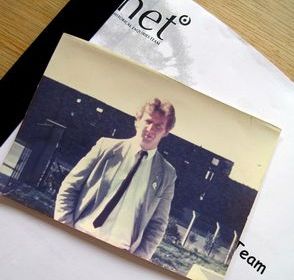
Loyalist victim family want inquest (Belfast Telegraph)
The family of a man shot dead by loyalist paramilitaries in Northern Ireland while undercover troops were at the scene are to push for an inquest into the killing.
A new police report on the attack, where three republicans were ambushed after leaving a police station in Lurgan, Co Armagh, in 1990, revealed that eight undercover soldiers were monitoring the men around the time of the killing.
Former republican prisoner Sam Marshall was shot dead but the presence nearby of a red Maestro car, later identified as a military intelligence vehicle, sparked swift claims of a security force role in the killing.
It has now emerged the car was one of six vehicles in a major surveillance operation on the republicans, involving eight armed undercover soldiers, and though the loyalist killers launched the attack and escaped, investigators said there was no evidence of state collusion with the gunmen.
There has never been an inquest into the shooting but the Marshall family’s solicitor Padraigin Drinan said she would now be pressing for one to be held, 22 years after the event.
“The family have wanted an inquest all along and on several occasions they have been told there is no need for an inquest because there has been a police investigation into the death,” she said.
The attack was claimed by the loyalist Ulster Volunteer Force but the gunmen have never been identified. A police investigation into a robbery in Belfast led to the arrest of two loyalists later convicted for supplying the killers’ car.
A fresh decision on whether an inquest should now be held was delayed until the police Historical Enquiries Team (HET) reviewed the case.
The men targeted in the attack were high-profile republicans including Colin Duffy, who was acquitted in January of murdering two soldiers at Massereene army base in Antrim.
But deputy leader of the nationalist SDLP Dolores Kelly said she believed the controversy over the 1990 case subsequently led young people to join republican paramilitary ranks. She said: “I am convinced that this murder led other people to take up the gun during the last ugly years of the Troubles. The HET owe Sam Marshall’s family and the wider public the truth.”
Killing sparked accusations of collusion (Irish Times)
The Sam Marshall killing sparked controversy across 20 years and led to TV documentaries on allegations of state collusion with loyalist paramilitaries.
The furore was caused by the presence of a single military intelligence car at the murder scene, but this has now emerged as being only part of the story.
The Marshall family says it is determined to continue to press for further information.
Sam Marshall’s brother Gary said: “They hoped that we would go away. But, no matter if it takes another 22 years, we will still fight on.”
The HET’s (Historical Enquiries Team) 50 page report, however, found no evidence that soldiers or police officers had prior knowledge of the attack.
The review team said it had “assessed all the investigative and intelligence material linked to Sam’s murder and found no evidence of collusion”.
But the Marshall family said that while the HET had exposed how much the police knew about the surveillance operation at the time, its review relied too heavily on an examination of the statements from the original RUC investigation.
The family has criticised the HET decision not to reinterview the undercover soldiers, or to name their military unit.
The relatives asked nearly 200 questions in response to the HET report, but remain unhappy with the answers, despite the review team’s claim it has done its best to meet the family’s concerns.
The HET and the family are effectively divided over key issues, including:
* How did the killers know when the republicans were leaving the police station?
The family has always claimed the three republicans attended the station at pre-arranged times known only to the trio, their lawyers and police.
It is now known troops followed the men on four occasions in the month prior to the killing as they walked to and from the station.
On the night of the murder, two undercover soldiers with camera equipment were in a security post at the entrance of the station and monitored the republicans as they arrived and left.
The HET, however, said it was public knowledge the men were on bail and the pre-arranged times might also be known to their wider family circle.
The review team could not rule in or out whether the RUC leaked information to loyalists, but argued the killers may have mounted their own surveillance.
* What was the significance of the major surveillance operation?
RUC Special Branch had briefed the undercover troops. But the HET revealed the RUC sought to deny existence of a surveillance operation following the killing by giving “misleading or incomplete” statements.
Then in 1993 a senior RUC officer who investigated the Sam Marshall murder gave
evidence at an unrelated extradition hearing in the United States.
Under cross-examination he indicated the Maestro was a military intelligence vehicle, but denied Sam Marshall was the target of the surveillance.
The senior officer did not assist the HET review and has since died.
The HET said it could “unequivocally state” the men were under surveillance, but said it was legitimate to monitor those suspected of paramilitary links.
* A death threat against Sam Marshall and the handling of evidence after his murder.
On February 13 the RUC received a murder threat against six men including Sam Marshall, but he was not informed until March 1, six days before his murder.
Former Metropolitan Police commissioner Lord Stevens had been probing claims that security forces were passing files on republican suspects to loyalist gangs.
And the threat said: “Tell Stevens we’ve got a whole lot more f***ing names and will do one of them this weekend.”
The RUC failed to inform the undercover soldiers of the threat against Sam Marshall, which the HET said was a “shortcoming”.
The HET revealed two gloves were found by police near the killers’ burned-out getaway car. The review found “no trace of the gloves”, but assessed the impact of their disappearance as “low”, questioning their likely evidential value in 1990.
Events surrounding the shooting, shortly after 7.30pm, March 7.
The two soldiers who followed the republicans on foot that evening were nearby when two masked UVF gunmen jumped from a Rover car to fire 49 shots.
The soldiers said they lost sight of the republicans as the attack started, which was launched as night fell.
The HET visited the scene, noting a high wall at a curve in the road, and said the account was “quite possible”.
A plainclothed soldier said one of the republicans, Tony McCaughey, ran past him as he fled the killers.
The family claim this evidence, and statements from civilian eye-witnesses, undermine the official account.
The HET disagreed and attributed discrepancies to factors including human error.
Asked if the troops feared they might be the target of a surprise attack in what was a republican area, the HET said: “The soldiers make no reference to this effect.”
The HET said it has not accessed radio transmissions between soldiers on the night.
The Marshall family said that instead of escaping into nearby rural roads after the shooting, the gunmen drove deeper into republican areas of Lurgan — and over a railway crossing where they risked being trapped by the barrier — before abandoning their car on the M1 motorway.
The relatives believe the gunmen took the risky decision to pursue the two republicans who fled the scene.
The HET said statements indicate the army surveillance team drove around Lurgan trying to spot the killers without success, before being called back to base.
The review team does not know how long the search lasted and said it does not know where the soldiers’ were based.
Since civilians reported seeing the gunmen, the Marshall family has questioned the failure to spot the Rover car “with three passengers on board, all wearing balaclavas, and carrying automatic weapons”.
 The Five Demands
Pingback: OMICIDIO SAM MARSHALL. LA FAMIGLIA: “IL LIBRO CONFERMERÀ LA COLLUSIONE” | The Five Demands
Pingback: MACCHINA DELLA MORTE, LA GUERRA BRITANNICA IN IRLANDA | The Five Demands