“INSOSTENIBILI” I COSTI DELLA ‘VIGILANZA’ SULLE PARATE
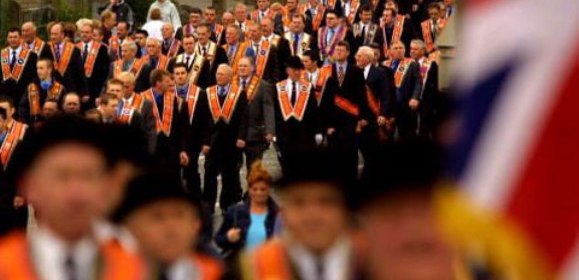
Parades policing cost ‘unsustainable’ (UTV)
Parades Commission Chairman Peter Osborne says the cost of policing contentious parades in Northern Ireland is “unsustainable” and must be reduced through dialogue.
Commenting at the conclusion of the traditional marching season, Mr Osborne said over £7m has been spent policing parades in the region this year.
“Spending upwards of £7m over the course of a year on policing parades and related protests is unsustainable,” he said.
“Take Rasharkin, for example, where £600,000 was reportedly spent policing parades through a small village with a population of less than a thousand people.”
“Clearly that is not the best use of scarce public resources.
“People will rightly ask how many neighbourhood policemen could that money provide, tackling the needs identified across the community?”
“Obviously public order must be maintained and the rights to parade and protest must be protected, but as a society we can’t ignore the financial, economic and social costs associated with parading disputes.”
The momentum generated by ongoing political leadership, a willingness to engage in dialogue and further demonstrations of goodwill and mutual respect could have significant benefit for the 2013 marching season, provided the work is started now.
Peter Osborne, Parades Commission
Mr Osborne recognised the “leadership and positive input” from many in the community but added that trouble in north Belfast demonstrated the challenges that still exist.
There were incidents of disorder in Ardoyne following the Twelfth of July celebrations as well as minor trouble outside St Patrick’s Church on Donegall Street during a Black Preceptory parade in August.
The Parades Commission imposed restrictions on bands parading after a video showed a loyalist band playing an alleged sectarian song whilst circling outside the church on 12 July, although the band denied the tune was sectarian.
Since then there has been increasing pressure on the Orange Order to talk with local residents in addition to their conversations with the parish at the church ahead of parades.
“It is important we also acknowledge the progress made all over Northern Ireland rather than concentrate on just one or a few areas,” Mr Osborne said.
“We hope people have the opportunity to step back, and examine their own approach and contribution to helping resolve contention in the relatively few areas where it still exists.
“Obviously significant issues remain, but the Commission recognises the leadership shown over recent weeks, both at a local and regional level.”
He said the Commission was encouraged that the Orange Order have made steps to remove barriers from talking to residents about parades, which it hopes “translates into tangible progress on the ground”.
“Where an expectation has been created that dialogue will occur, it is important to follow that through,” he said.
He said the Commission advocated “constructive leadership” as being key for progress on contentious parade issues and they would assist any efforts for further engagement.
“Ideally, if local accommodations were reached the Commission would not be required to make determinations during next year’s traditional marching season. That is an ambitious target, but the building blocks are already in place,” Mr Osborne added.
 The Five Demands