EASTER IN BELFAST
The Five Demands is pleased to publish today an editorial on the Easter Rising Commemorations, marking the beginning of a collaboration, although occasionally, of a former Republican activist in West Belfast which has enthusiastically agreed to help us providing readers with a real irish point of view into the actual situation in Northern Ireland.
Starry Plough was back home in Belfast for Easter. For those not familiar with this time of the year in Ireland it’s probably the most important event in the entire Irish Republican calendar when Republicans of various shades commemorate the declaration of The Republic from the steps of the General Post Office in Dublin ninety four years ago.
There are a number of commemorations held throughout the island on Easter Sunday and Monday, with West Belfast holding three separate commemorations on Easter Sunday, (The Workers Party, Provisional Sinn Fein and the Irish Republican Socialist Party), the Sinn Fein event being the largest one. So, it was on Sunday April 4th Starry Plough found himself back in his native West Belfast with thousands of other Irish Republicans commemorating the Easter Rising at the Sinn Fein Commemoration.
It was the first time Starry Plough had been back in three years and it was exactly as impressive as it had always been before, a great mix of theatre and politics, with groups dressed as flying columns from the Tan War etc. It was particularly satisfying to see the female volunteers of Cumann na mBan represented at the Belfast event as the Irish Republican struggle has always relied heavily on Irish women both in active and non active military roles with Belfast female oglaigh such as Mairead Farrell and Patricia Black being at the cutting edge of armed struggle.
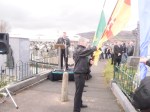
So, it was with old friends and comrades that Starry Plough walked from Beechmount Avenue to Milltown cemetery to listen to Sinn Fein President, Gerry Adams, address the Provisional Sinn Fein faithful:
When we reached the gates of Milltown Cemetery something strange happened, a group of friends that Starry Plough was with, all lifelong members of the Republican Movement, broke off and decided to go to an Cumann Na Meirleach , (locally known as The Felons), for a beer instead of listening to their party President’s speech. In all his years of attending Easter commemorations Starry Plough has never seen this happening and was left feeling was this a symptom of mainstream Republican activist weariness and was it representative of the wider movement?
Easter Monday saw Starry Plough attend the first ever Eirigi Easter Commemoration, again at Milltown Cemetery, with the main speech being given by veteran Belfast Republican, former blanketman and old friend of Starry Plough Pádraic ‘Chopper’ Mac Coitir.
Starry Plough Pádraic ‘Chopper’ Mac Coitir Speech
Eirgi 1
Eirigi 2
Eirigi was formed by a number of disillusioned Provisional Sinn Fein members in Dublin, initially as a pressure / campaigns group, in 2006 but at it’s first Ard Fheis, (annual conference where policy is made), in 2007 it’s members voted to re constitute it as a political party which it subsequently did.
Starry Plough was surprised at the amount of people gathered at the gates of Milltown Cemetery, a number of former Sinn Fein activists, quite a few ex prisoners but the overwhelming majority of the group seemed to consist of people in their twenties. Eirigi calculate the number of people at five hundred, from a first eye account I think that it’s a reasonable estimate.
Chopper spoke passionately about the historical context of what Easter means to Republicans, describing the various repressive measures that reactionary forces of both states in Ireland had used against Republicans who disagreed with the status quo before speaking of the contemporary history of the 1981 Hunger Strike and the current political situation stating:
“None of us can say for certain where these men and women would be today but as Republicans they would definitely not accept a partitionist state nor be participants in it”
He then went on to stress Eirigi’s socialist and internationalist credentials drawing comparisons between Republican’s who oppose the current political structures in the northern state and those Irish Republicans who fought and died against the rise of fascism in Spain in the 1930’s:
“Why didn’t Republicans just accept the status quo and row in behind Fianna Fáil? Why did a large number of them defy the conservative elements in the IRA and go and fight in Spain? Because like us here today they believed that the only way in which to challenge these fascists was through resistance. The Spanish Civil War was one of the most defining moments of the 20th century and without the sacrifice of Internationalists like Charlie Donnelly, Jim Straney and Bob Hilliard where would we be?”
Before expressing solidarity greetings and support to people in struggle around the globe:
“We salute the people of Palestine and the democratically elected government of Hamas. We stand shoulder to shoulder with the people of the Basque Country, of Cuba, of Venezuela, of Vietnam and others throughout the world defending democracy and Socialism. We will always oppose the aggression of the British, the US and their allies who are destroying the lives of millions in Iraq and Afghanistan”
And concluding that Eirigi will challenge the political status quo in both states in Ireland on a long term basis:
“As Mac Piarais said, ‘they think have purchased half of us and intimidated the other half they are wrong’. Given that is the case I am proud to say that I too ‘dissent’ from the current state today. However the one thing I am not is a ‘traitor’, as I assume none of you here today are”
“So where do we go? We will not go away you know; that much is for sure. We know what we are up against – the same bigots in unionism, the reactionary forces of the Free State, those who wish to reform Stormont and ultimately the British government. Of course we have a daunting task ahead of us but unless we get up and do something about it our goal of a Democratic Socialist Republic will not be handed to us”
“As the men on the blanket protest used to shout in the face of the screws – Tiocfaidh ár lá!”
Since the current phase of the conflict began with loyalist and state force pogroms on nationalist areas in 1969 every decade has seen Irish Republicanism convulsed by a number of schisms.. The claims that the Irish Republican Army failed to defend nationalist areas from these pogroms led to the formation of the “Provisional” IRA and the subsequent feud between it and the “Official” IRA which saw a number of both groups killed in the early 1970’s, The 1980’s saw the formation of Republican Sinn Fein after Sinn Fein members voted to end it’s abstentionist policy and allow elected Sin Fein Teachtaí Dála to take their seats in the twenty six county Parliament, Dáil Éireann. The 1990’s saw the IRA ceasefires of 1994 and 1997 and the alleged defection of the IRA’s Quartermaster General department to form the “Real” IRA in the wake of an IRA convention meeting in Donegal. 2005 saw The IRA decommission its arms with two witnesses appointed by General John de Chastelain’s International Commission on Decommissioning and Sinn Fein vote to accept the PSNI at it’s Ard Fheis in 2007.
Sinn Fein have consolidated their position as the largest nationalist party in the Northern state and, to date, no other party has been able to offer a credible alternative to the Sinn Fein analysis, (Republican Sinn Fein candidates standing for the 2007 northern Assembly elections as abstentionists got just 0.38 % of the vote), in the second decade of the twenty first century it will be interesting to see if Eirigi can emerge as an alternative political vehicle to those Republicans disillusioned with Sinn Fein.





Proseguire per la traduzione in lingua italiana
The Five Demands ha il piacere di pubblicare oggi un editoriale sulle Easter Rising Commemorations, che segna l’inizio di una collaborazione, seppure occasionale, con un ex attivista repubblicano di West Belfast che ha accettato con entusiasmo di aiutarci a fornire ai lettori un reale punto di vista irlandese dell’attuale situazione in Irlanda del Nord.
E’ stato scelto di pubblicare gli editoriali dando la precedenza alla lingua originale, e a seguire la traduzione in italiano.
Starry Plough era di ritorno a casa a Belfast per Pasqua. Per quelli che non hanno familiarità con questo periodo dell’anno in Irlanda, è probabilmente l’evento più importante nell’intero calendario repubblicano irlandese, quando Repubblicani di varie correnti commemorano la Proclamazione della Repubblica dai gradini del General Post Office a Dublino di 94 anni fa.
C’è un numero di commemorazioni tenute in tutta l’isola la Domenica di Pasqua e il Lunedì Santo, a West Belfast si tengono tre commemorazioni separate la Domenica di Pasqua , (The Workers Party, Provisional Sinn Fein e l’Irish Republican Socialist Party), con l’evento del Sinn Fein che è il maggiore.
Quindi, è stato domenica 4 aprile che Starry Plough si è ritrovate di ritorno nella sua nativa West Belfast con migliaia di altri Repubblicani Irlandesi che commemoravano l’Insurrezione di Pasqua alla commemorazione del Sinn Fein
E’ stata la prima volta che Starry Plough ha fatto ritorno dopo tre anni ed è stato impressionante esattamente come lo era sempre stato in precedenza, un grande mix di teatro e politica, con gruppi vestiti come colonne volanti ( flying columns) della Tan War ecc.
Era particolarmente soddisfacente vedere le volontarie di Cumann na mBan rappresentate all’evento di Belfast, visto che la lotta Repubblicana Irlandese ha sempre contato molto sulle donne irlandesi sia in ruoli militari attivi che non, con donne soldato (oglaigh) di Belfast come Mairead Farrell e Patricia Black che si sono trovate in prima linea nella lotta armata.
Quindi era con vecchi amici e compagni che Starry Plough ha camminato da Beechmount Avenue al Milltown Cemetery per sentire il presidente del Sinn Fein, Gerry Adams, rivolgersi ai fedeli del Provisional Sinn Fein:
Gerry Adams Speech
Quando abbiamo raggiunto le porte del Milltown Cemetery è successo qualcosa di strano, un gruppo di amici con cui Starry Plough si trovava, tutti membri da una vita del Movimento Repubblicano, si è staccato e ha deciso di andare da Cumann Na Meirleach , (localmente conosciuto come The Felons), per una birra invece di ascoltare il discorso del presidente del loro partito. In tutti gli anni di partecipazione alle commemorazioni di Pasqua, Starry Plough non aveva mai visto accadere questo ed è rimasto a chiedersi se fosse un sintomo di stanchezza della corrente principale dell’attivismo repubblicano e se rappresentasse il movimento più ampio.
Il Lunedì di Pasqua ha visto Starry Plough prendere parte alla sua prima commemorazione in assoluto di Pasqua di Eirigi, ancora al Milltown Cemetery, con il discorso principale tenuto da un veterano repubblicano di Belfast, che era stato un blanketman e un vecchio amico di Starry Plough, Pádraic ‘Chopper’ Mac Coitir.
Starry Plough, Pádraic ‘Chopper’ Mac Coitir Speech
Eirigi 1
Eirigi 2
Eirigi è stato formato da un numero di membri disillusi del Provisional Sinn Fein di Dublino, inizialmente come gruppi di pressione/campagne, nel 2006. Ma alla suo primo Ard Fheis, (conferenza annuale in cui si decide la policy), nel 2007, i suoi membri hanno votato per ricostituirsi come partito politico, cosa che hanno di conseguenza fatto.
Starry Plough era sorpreso del numero di persone radunate alle porte del Milltown Cemetery, un numero di ex attivisti del Sinn Fein, un po’ di ex prigionieri ma la stragrande maggioranza del gruppo sembrava essere fatta di ventenni. Eirigi calcola che ci fossero 500 persone, ad occhio credo fosse una stima ragionevole.
Chopper ha parlato con passione del contesto storico di cosa Pasqua significhi per i Repubblicani, descrivendo le varie misure di repressione che le forze reazionarie di entrambi gli Stati d’Irlanda hanno usato contro i Repubblicani che non erano d’accordo con lo status quo, prima di parlare della storia contemporanea dell’Hunger Strike del 1981 e della situazione politica attuale, dicendo:
“Nessuno di noi può dire per certo dove sarebbero ora quegli uomini e quelle donne, ma come Repubblicani di certo non accetterebbero uno stato diviso, né di esserne partecipi”
Ha poi proseguito sottolineando le credenziali socialiste e internazionaliste di Eirigi, facendo confronti tra i Repubblicani che si oppongono alla stuttura politica presente nello Stato del Nord e quei Repubblicani Irlandesi che combatterono e morirono contro il sollevamento del Fascismo in Spagna negli anni 30.
“Perché i Repubblicani non accettarono semplicemente lo status quo e si allinearono dietro il Fianna Fáil? Perché molti sfidarono gli elementi conservatori nell’IRA e andarono a combattere in Spagna? Perché, come noi oggi qui, essi credevano che l’unico modo per combattere il fascismo fosse la resistenza. La Guerra Civile Spagnola è stata uno dei momenti più decisivi della storia del 20mo secolo e senza il sacrificio di internazionalisti come Charlie Donnelly, Jim Straney e Bob Hilliard dove saremmo?”
Prima di esprimere saluti di solidarietà e supporto alla gente in lotta in tutto il mondo:
“Noi rendiamo omaggio al popolo di Palestina e al governo democraticamente eletto di Hamas. Stiamo spalla a spalla con la gente dei Paesi Baschi, di Cuba, del Venezuela, del Vietnam e gli altri in tutto il mondo che difendono la democrazia e il Socialismo. Ci opporreno sempre all’aggressione del Regno Unito, degli Stati Uniti e dei loro alleati che stanno distruggendo le vite di milioni di persone in Iraq e Afghanistan”
E concludendo che Eirigi sfiderà lo status quo politico in entrambi gli stati d’Irlanda su una base a lungo termine:
“Come disse Mac Piarais, ‘pensano di aver comprato la metà di noi e di aver intimidito l’altra metà ma si sbagliano. Detto questo, è il caso che io sia orgoglioso di dire che anche io ”dissento” dallo stato attuale oggi. Comunque, quello che non sono è un ”traditore”, come non credo lo sia nessuno dei presenti qui oggi ”
“Quindi dove andiamo? Sapete che non andremo via; questo è sicuro. Noi sappiamo contro cosa combattiamo – gli stessi bigotti nell’unionismo, le forze reazionarie dello Stato Libero, quelli che vogliono riformare Stormont e per ultimo il governo britannico. Di sicuro abbiamo un compito difficile di fronte a noi, ma se non ci alziamo e facciamo qualcosa l’obiettivo di una Repubblica Democratica Socialista non ci sarà dato”.
“Come gridavano gli uomini della blanket protest in faccia ai secondini – Tiocfaidh ár lá! ”
Dall’inizio della fase corrente del conflitto, che iniziò con i lealisti e i pogrom delle forze statali nelle aree nazionaliste nel 1969, ogni decade ha visto il Repubblicanesimo Irlandese spaccato da una quantità di scismi. Le rivendicazioni che l’IRA ha fallito nel difendere le aree nazionaliste dai pogroms ha portato alla formazione del “Provisional” IRA e alla faida tra questa e l’ “Official” IRA, che ha visto un alto numero di membri di entrambi i gruppi uccisi nei primi anni ’70. Gli anni ’80 hanno visto la formazione del Republican Sinn Fein dopo che i membri del Sinn Fein votarono per terminare la politica dell’astensionismo e permettere agli Teachta Dála (Deputati) eletti del Sinn Fein Teachtaí Dála (Deputati) di prendere i loro seggi nel Parlamento delle 26 contee, il Dáil Éireann. Gli anni 1990 videro il cessate il fuoco dell’ IRA nel 1994 e nel 1997 e la presunta defezione del dipartimento generale dell’approvvigionamento dell’IRA al formare il “Real” IRA alla vigilia di un meeting dell’IRA nel Donegal. Il 2005 ha visto l’IRA smantellare le sue armi con due testimoni nominati dall’International Commission on Decommissioning, il Generale John de Chastelain, e il voto del Sinn Fein per accettare la PSNI e il suo Ard Fheis (Incontro generale) nel 2007.
Il Sinn Fein ha consolidato la propria posizione come partito nazionalista di maggioranza nello Stato del Nord e, ad oggi, nessun altro partito è stato capace di offrire un’alternativa credibile all’analisi del Sinn Fein (i candidati del Repubblicano Sinn Fein che supportavano l’astensionismo alle elezioni per l’Assemblea del Nord nel 2007 ottennero solo lo 0.38 % dei voti). Nella seconda decade del ventunesimo secolo sarà interessante vedere se Eirigi può emergere come veicolo politico alternativo per i Repubblicani disillusi dal Sinn Fein.
(si ringrazia Valentina Prencipe per la collaborazione)
 The Five Demands